Painting a Picture with Words

Frank-Trimble-AI-round

One writing technique that a lot of authors use is sitting for blocks of time, either waiting for inspiration or putting down words, one after another. A certain degree of satisfaction is achieved for time well spent, and then, in a straight-line fashion, those writers lock themselves into doing the same routine—over and over and over. Ad Nauseum.

A more productive, non-linear approach is the answers to the proverbial questions: what am I doing wrong? Why can I not write more creatively, more descriptively, more originally?

The answers are in the questions.

Being a more creative writer entails not doing the same thing over and over. Human creativity comes from participating in life in as many ways as possible, experiencing it non-repeatedly in real time. Our amazing brains put “hooks” in those experiences, so when they are relegated to memory, they become available only through new experiences that sporadically tickle those hooks.

Instead of forcing yourself to sit for fixed blocks of time, break up your spates of actual writing, and go for a walk. Not just any walk: a trip through Nature (or the city—or the mall), briefly describing everything or anything you see. Doesn’t have to be fancy; just a few words will suffice. And don’t take notes: your memory is where the magic happens.

For instance:

“That dog has some very strange fur.” (describe the fur)

“Those lightning bolts scare the crap out of me!” (describe the light effects, the noises, the feelings, whether awe or fright or whatever)

Some people define originality as something that has never been seen, heard or felt before. But the fact is, every single experience you have as a human being is original, regardless of who has been there before you. So, it’s left to you to put that experience into words others can relate to, so they can feel what you felt, what you saw, or what you heard for themselves.

So, there you have it. Writing is not straight-line thinking; it comes with putting as many of those hooks in place as you can. Not in fixed blocks of composition or time, but with little squirts of imagination. Not necessarily connected, either.

Just painting a picture with words.

Frank Walters Clark, Author

https://frankwclark.com/

Mapping The Novel

Frank-Trimble-AI-round

One of the most important ideas to keep in mind when beginning a new novel is continuity. Having a beginning, a middle, and an end (BME) applies not just to the novel itself, but to each chapter as well.

The main theme is continuously interwoven throughout, and is never broken anywhere along the path of writing. Chapters, however, break the story into manageable blocks, with the story theme always threading in the background.

Think of the main story as a collection of back-to-back “short stories.” As before, each one has a beginning, middle and end (BME). Some chapters will necessarily reveal a thread connecting it to the theme. Other chapters will not stand alone: the “short story” spreads itself across more than one chapter but has the essential BME structure.

Another, analogous story structure is the road map. Most highways and byways have a multitude of alternate routes, and, for the most part, no one is better than any other. All are designed to get the “traveler” to their destination, speed here not being a consideration. Alternate routes sometimes have one city along the way; others have two or three or more.

As do stories with chapters; some short stories having only one BME, others having their structure spread over two or more chapters. The result is always the same: to get the reader to a specific destination with as little distraction as possible.

Whether that end point is a chapter, a series of chapters, or an entire story, the mapping of the novel must provide emotional satisfaction to the reader. And for the author, having provided that relief to readers is not only the ultimate goal, but is also the sign of a novel well-mapped.

The Past Is The Future Is The Past

Front-CoverFront Cover

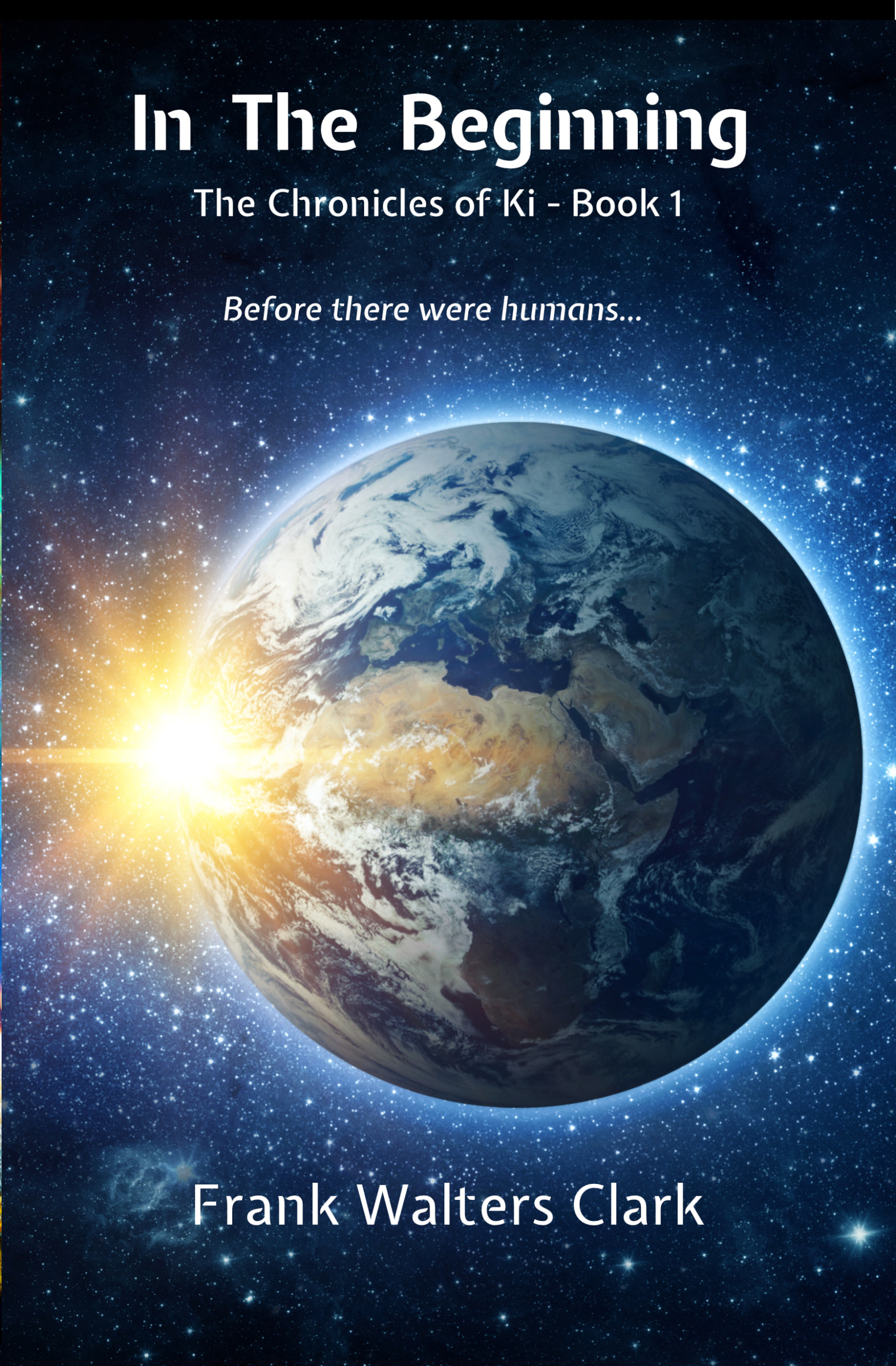
Book 1 in the series, The Chronicles of Ki titled In The Beginning features a long-lived Sect of Shem priest by the name of Curator of Ecid. Curator designates him as the high priest of the sect; Ecid tells us where on Nibiru he's from. His hometown, so to speak.

Among Curator of Ecid's philosophies is the posit that time is never ending. Looping around on itself like a Mobius, there is no beginning and no end. The statement that encapsulates that idea for Curator of Ecid is: The past is the future is the past.

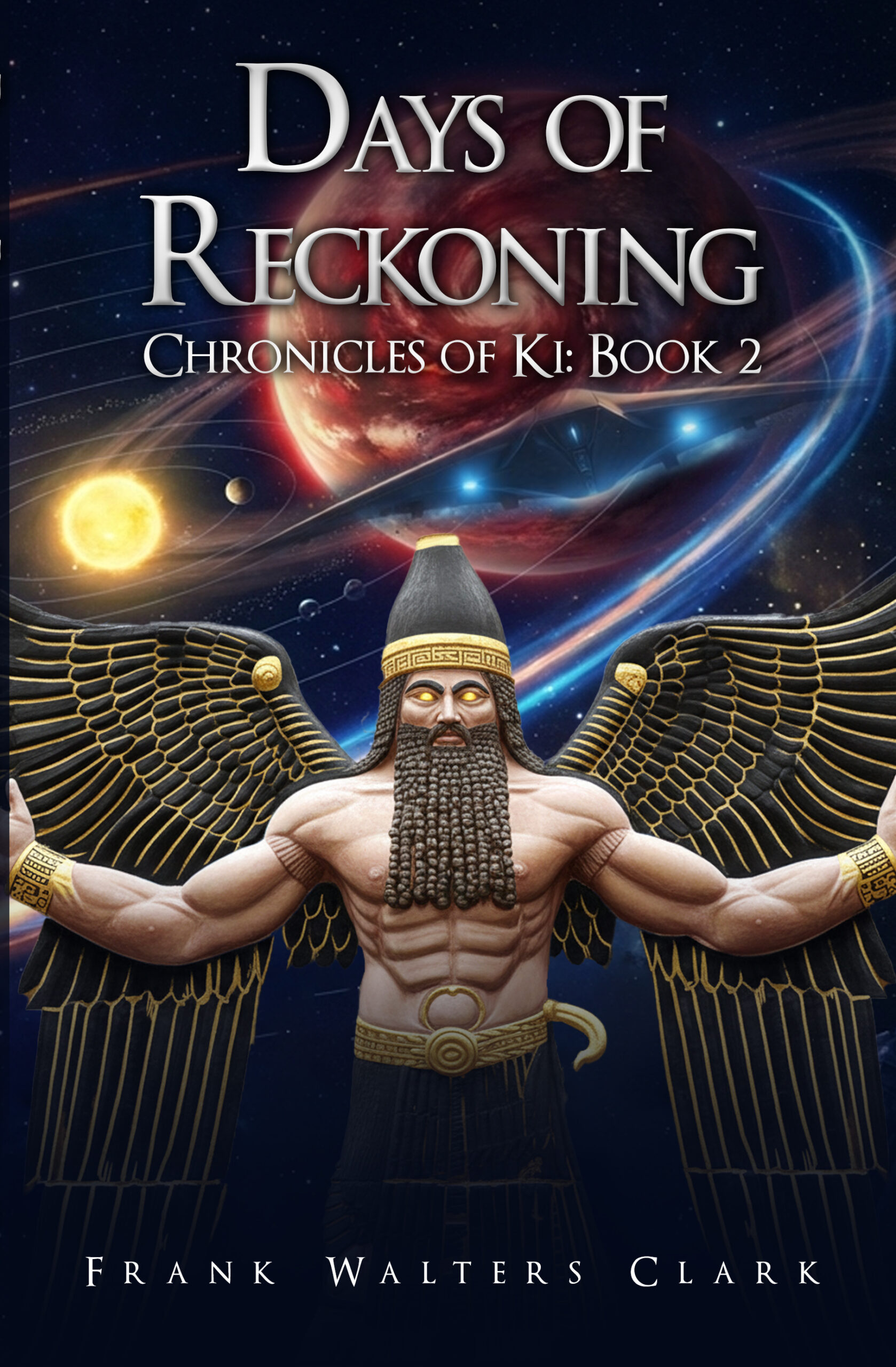
As readers who follow up and read Book 2 of the series, Days of Reckoning, will soon discover, that idea forms the framework upon which the story is built. Kings, queens, princely half-brother sons, a princess who acts as mediator between the constantly bickering princes. All appear in much the same form and personality in both stories.

The stand-alone books however, have interwoven themes that differ radically. And that is where the phrase, The Past is The Future Is The Past takes hold. Death and destruction is the physical representation of that phrase in both books, as are the royal relationships from Book 1 that are repeated in Book 2.

Start your reading adventure here, with Book 1: In The Beginning.

Or, if you prefer, since both are stand-alone stories, Book 2: Days of Reckoning.

Character Conflicts

Front Cover

While I was writing "Days of Reckoning," I was continuously encountering the chasm that existed between the two half-brothers, Jarv and Ariel. Jarv, the blood heir to the throne; Ariel, the first born and denied his right by birth to the throne.

Both have valid claims, yet tradition and royal heritage dictates that only one of them is the true heir: Jarv, the "blue blood" son, is of pure royal birth, with both parents of pure blood lineage. Ariel insists that, since he is first born, his is the right to ascend to the throne. The fault in his claim lies with his mixed blood: his mother was not a blood line ancestor, and hence, that fact leaves Ariel unqualified to wear the crown.

The distance that Jarv maintains from his half-brother cannot be closed, despite Ariel's attempts to placate his oft times moody sibling. Even efforts by their half-sister, Mei, fall short of healing the rift.

As the story progresses, the alienation grows, and finally the brothers participate in an age old ceremony that pits them against each other with deadly daggers in a dance of death. Blood is drawn but no real resolution comes out of the skirmish.

The actual resolution is far beyond either of the brothers' imagination, and causes death and destruction unimaginable to supposedly peace loving race of advanced beings.

© Copyright 2026 Frank Walters Clark
All rights reserved.

Genetic Engineering

Genetic engineering has been a topic of great interest for decades to scientists and geneticists alike. Modern genetic engineering is the direct manipulation of an organism's genes using biotechnology. It involves techniques like CRISPR-Cas9, which allows scientists to edit DNA with high precision, effectively acting as molecular scissors to cut, add, or alter specific genetic sequences. This technology enables the correction of genetic defects, the creation of genetically modified organisms (GMOs) for agriculture, and the development of novel medical treatments such as gene therapy. Current applications range from producing insulin-resistant bacteria to engineering drought-resistant crops and exploring the potential to cure hereditary diseases by rewriting the genetic code at the cellular level.

In The Beginning, book 1 in the series, The Chronicles of Ki, hints at that very subject as early generations of Annunaki royals struggle to dominate their place in line to the throne. Brother against brother, father against son, the conflict rages on, starting with Book 1 and continuing to Book 2, Days of Reckoning.

Book 2, Days of Reckoning utilizes the theme of genetic engineering throughout. Beginning with the discovery of a primitive species suitable for experimentation, the story winds through the various stages of genetic manipulation, and culminates with the full presentation of a new species, called Pada. A slave species that will serve the Annunaki gold miners, relieving them of the hardships related to mining for ore.

The story's climactic ending is a real shocker...

"The past is the future is the past."

Curator of Ecid

From The Chronicles of Ki, Book 1: In The Beginning.

Published

March 31, 2026

Share

© Copyright 2026 Frank Walters Clark ~ All Rights Reserved